



Glaucoma Service
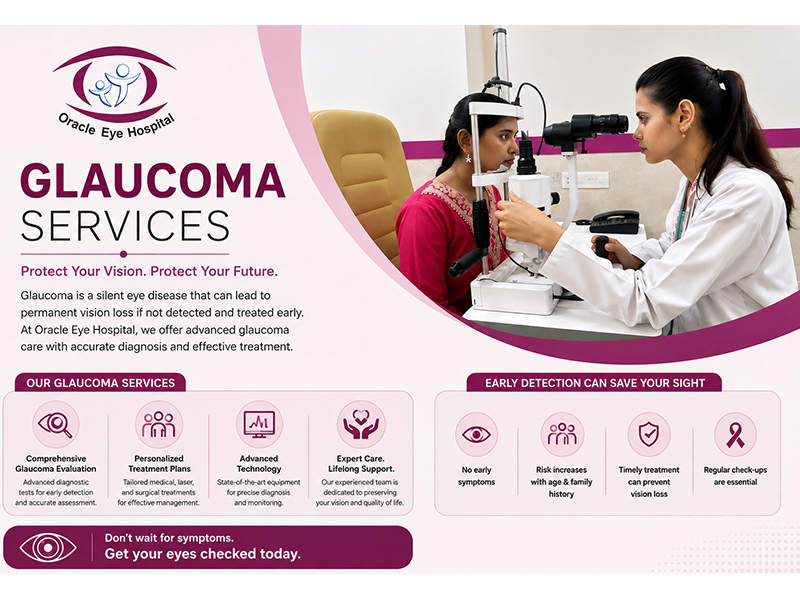
What is Glaucoma?
Glaucoma is a group of eye diseases that damage the optic nerve, usually caused by increased pressure in the eye. The optic nerve sends visual information from your eye to your brain. When the optic nerve is damaged, you can lose your vision.
Generally, glaucoma affects both eyes and often has a genetic component. In most types of glaucoma, vision loss occurs so gradually that you may not notice a change in vision until the condition is at an advanced stage. Acute angle-closure glaucoma is a medical emergency that requires immediate treatment. Secondary glaucoma is usually associated with another eye disease or abnormality.
While most glaucoma cannot be cured, it can be treated effectively through medication, laser treatment, or surgery.
Types of Glaucoma
The two main categories are open-angle glaucoma and angle-closure glaucoma (also called narrow-angle glaucoma). In angle-closure glaucoma, the drainage angle formed by the cornea and iris closes or becomes blocked. Many people with angle-closure glaucoma develop it slowly (chronic angle-closure glaucoma), but in some cases, it may happen suddenly (acute angle-closure glaucoma), which is considered a medical emergency.
In open-angle glaucoma, the drainage canals become blocked gradually, causing pressure to build up inside the eye. The drainage angle remains open, but the aqueous humor flows out too slowly.
Variations of open-angle glaucoma include primary open-angle glaucoma (POAG), normal-tension glaucoma (NTG), pigmentary glaucoma, pseudoexfoliative glaucoma, secondary glaucoma, and congenital glaucoma.
Glaucoma Symptoms
Glaucoma is known as the "silent thief of sight" because most types typically cause no pain and produce no symptoms until noticeable vision loss occurs. For this reason, glaucoma often progresses undetected until the optic nerve has been irreversibly damaged, with varying degrees of permanent vision loss.
However, there are several types of glaucoma, and symptoms vary by type and severity of the condition:
- Open-angle glaucoma begins with patchy blind spots, usually in your peripheral vision
- Severe eye pain or forehead pain (in acute cases)
- Redness of the eye
- Decreased or cloudy vision
- Nausea and vomiting (in acute cases)
- Tunnel vision in the advanced stages
- Halos around lights
If you experience sudden onset of these symptoms, especially severe eye pain, seek immediate emergency medical care to prevent severe and complete vision loss. If you have glaucoma in one eye, stay on your treatment schedule and get regular checkups, as you are at higher risk of developing glaucoma in your other eye.
Narrow-angle and acute angle-closure glaucoma involve a sudden increase in eye pressure. If you experience these symptoms, visit the emergency room immediately for prompt evaluation and treatment.
How is Glaucoma Diagnosed?
Since glaucoma often has no early symptoms, regular comprehensive eye examinations are crucial for early detection. The diagnosis of glaucoma involves a comprehensive eye examination that includes dilating the pupils to examine the internal structures of the eye.
During the examination, your eye doctor will check the front structures of the eye, including the drainage area where fluid leaves the eye. Eye pressure is measured using a tonometer, and if results are abnormal, additional testing may be performed. Optical coherence tomography (OCT) provides detailed images of the optic nerve and retinal nerve fiber layer.
The doctor may also perform gonioscopy, which uses a special lens to examine the drainage angle of the eye to determine if it's open or blocked. Visual field testing checks for blind spots in your peripheral vision that may indicate glaucoma damage.
Additional tests may include pachymetry to measure corneal thickness, optic nerve photography, and regular monitoring to track any progression of the disease. Early detection through regular eye exams is essential for preventing vision loss from glaucoma.
Our Glaucoma Care Services
- Comprehensive glaucoma screening and diagnosis
- Intraocular pressure monitoring and management
- Advanced visual field testing
- Optical coherence tomography (OCT) imaging
- Medical management with prescription eye drops
- Laser treatment procedures
- Surgical intervention when necessary
- Regular monitoring and follow-up care
Why Choose Our Glaucoma Services?
Our experienced ophthalmologists specialize in the early detection, diagnosis, and comprehensive management of glaucoma. We use state-of-the-art diagnostic equipment and the latest treatment techniques to help preserve your vision.
Early detection and treatment are crucial in managing glaucoma effectively. Our team is committed to providing personalized care plans tailored to each patient's specific type and stage of glaucoma, ensuring the best possible outcomes for vision preservation.
We believe in patient education and will work closely with you to understand your condition, treatment options, and the importance of regular monitoring to maintain your eye health and quality of life.